If you’ve been thinking about making a move in North Texas, Prosper should be at the top of your list. Once a small, quiet town, Prosper has quickly become one of the most desirable places to

Dated: November 25 2025
Views: 7257
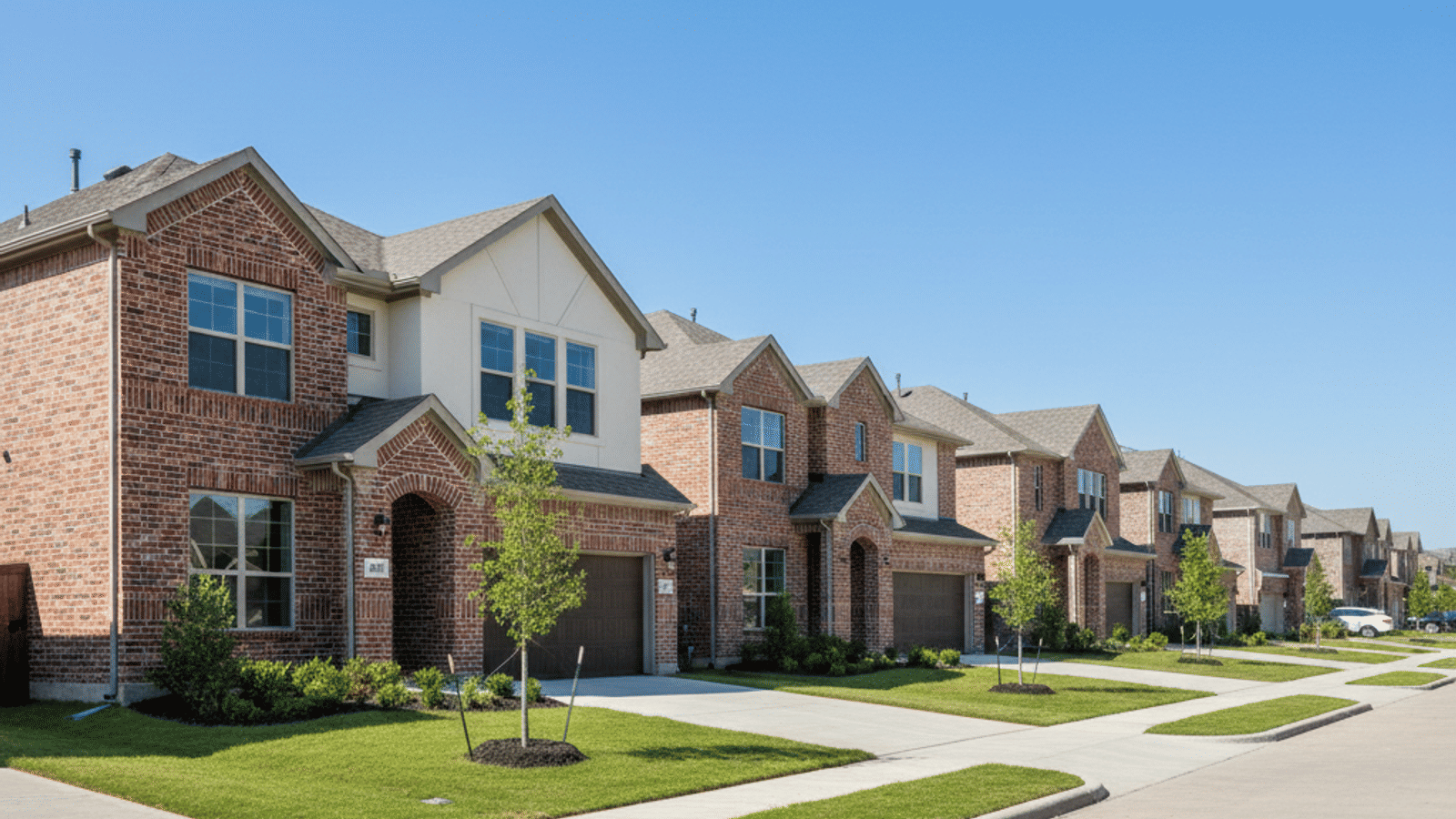
Frisco, TX sits along the northern border of Plano on the north side of the Dallas Fort Worth Metroplex, and it has a long running reputation for fast growth and polished master planned development. In recent years, Frisco was the fastest-growing city in the nation among large cities, and a 2025 national study ranked Frisco as the most affordable of the fastest-growing cities in the United States when it compared incomes and everyday costs.
When people talk about the cost of living in Frisco, they are usually trying to sort out whether higher housing costs are balanced by incomes, taxes, and day to day expenses.
Home prices in Frisco are firmly on the higher end for a city in the United States. Recent housing data puts the homes for sale in Frisco Texas value in the mid 600,000 dollar range as of late 2025, with a 1 year change of about negative 4 percent, a median list price close to 695,000 dollars, a median sale price around 625,000 dollars, and a median 58 days to pending.
Cost of housing comparisons show similar results. Independent cost of living index providers estimate a typical home cost around 653,000 dollars, which places Frisco’s housing costs roughly 90 percent higher than the country’s average and well over 100 percent higher than the average Texas home.
Rents are somewhat more moderate than purchase prices. Recent rental indexes show average asking rents in Frisco around the mid 1,800 dollar range per month as of October 2025, compared with a national average rent near 1,950 dollars, so overall asking rents sit slightly lower than the national average even though the broader cost of housing is higher than the national average.
Other aggregators that focus on specific unit types paint a slightly different picture. Some cost of living tools report that a two bedroom rental in Frisco runs about 2,030 dollars per month, which is roughly 40 percent more expensive than the national average two bedroom rent and well above the Texas state average, while other calculators place median rent closer to 1,880 dollars.
For people who live in Texas, one of the biggest structural differences compared with many other states is the absence of state income tax. Wages and salaries for people who work in Texas are subject to federal income taxes but not a separate state personal income tax, so for some households that partially offsets higher housing or property tax bills.
Sales tax is one of the major tools Frisco city and the state of Texas use to fund services. As of 2025, the combined sales tax rate in Frisco is 8.25 percent, made up of a 6.25 percent state rate plus 2.0 percent in local city and economic development components. That combined rate is common among larger cities and counties in Texas, so when you compare the cost of living between Frisco and other parts of the Dallas Fort Worth area, the sales tax side is usually similar.
Property taxes form the other large piece of the tax picture and they are very local. Frisco spans Collin and Denton counties, and within those county lines homes in Frisco fall under several taxing entities that usually include the City of Frisco, either Collin or Denton County, and at least one school district such as Frisco ISD, Prosper ISD, Lewisville ISD, or Little Elm ISD. For the mid 2020s budget years, the City of Frisco lists a city rate a little over 0.42 dollars per 100 dollars of value, with total tax rates typically in the range of about 1.63 to 1.82 percent of assessed value once you add the county, community college on the Collin side, and school district portions.
On a median home around 650,000 dollars, that total rate would translate to roughly 10,600 to 11,800 dollars per year before exemptions, depending on which part of the city and which school district the property sits in.
The city has also adopted a 20 percent residential homestead exemption on the city portion of the bill beginning with the fiscal 2026 budget, which trims the city line item for owner occupied homes but does not reduce county or school district rates.
Utility costs in Frisco tie closely to both climate and home size. Local utility breakdowns suggest that a typical household in Frisco spends roughly 200 to 350 dollars per month on basic utilities such as electricity, water, sewer, trash, and basic internet, with bills on the lower end for smaller apartments and on the higher end for larger single family homes with heavy summer air conditioning use.
Major cost of living calculators estimate an average energy bill around 240 to 250 dollars per month and note that utility prices in Frisco run around 20 percent higher than the national average, even though the overall utility index sometimes lands near 100 in broader cost of living index comparisons.
Electricity prices in Texas are closely linked to energy costs on the ERCOT grid, so a hot summer or fuel price swings can increase or decrease monthly bills. For budgeting, many residents set a working range of roughly 250 to 300 dollars per month for a detached home and somewhat less for a smaller rental, then adjust as they see their actual usage across the first year.
Grocery prices in Frisco track the broader Dallas Fort Worth region rather than moving on their own. The Consumer Price Index for food at home in the Dallas Fort Worth Arlington area showed moderate year over year increases through 2024 and 2025, which points to steady but not extreme grocery inflation for the region.
Most cost of living index providers assign Frisco a grocery index of around 104, which means grocery prices in Frisco average a few percentage points above the national average, while overall living expenses come in higher mainly because of housing.
Frisco functions as a car oriented suburb, with many residents using the Dallas North Tollway to reach jobs throughout the Dallas Fort Worth Metroplex. Daily driving costs revolve around fuel, maintenance, insurance, and, for people who choose toll roads, the added cost of tolls between Frisco and Dallas or other employment centers.
Fuel costs currently lean in residents’ favor compared with the national picture. Statewide data from late 2025 shows an average price for regular gasoline in Texas around the mid 2.50 dollar range per gallon, compared with a national average above 3 dollars per gallon, which means fuel in Texas is noticeably lower than the national average. Major cost of living calculators estimate that transportation expenses such as gas and local transit in Frisco sit roughly 5 percent lower than the national average.
Higher housing and living expenses in Frisco go hand in hand with higher incomes. The City of Frisco’s 2025 At a Glance report lists a median household income of 141,129 dollars, which is well above typical U.S. metro area medians and well above the country’s average.
Other aggregators that compile data from national surveys and private sources place the median household income in Frisco closer to 146,000 dollars, but all agree that incomes in Frisco sit far above national and state averages.
Several cost of living tools provide benchmarks for recommended income levels in Frisco. One widely cited provider estimates that living in Frisco comfortably requires a minimum annual income of about 125,000 dollars for a multi person household and about 68,000 dollars for a single person, based on 2025 cost of living index data and typical budget shares.
For someone buying a median home in Frisco, that often translates into a recommended income somewhere in the 130,000 to 150,000 dollar range, while a renter targeting an average apartment might be comfortable with 90,000 to 110,000 dollars, depending on debts and lifestyle.
When you compare the cost of living in Frisco to the national average, the main thing that stands out is housing. Major cost of living indexes give Frisco a total cost of living score around 111 to 112, which means overall living expenses run roughly 12 percent higher than the U.S. average and noticeably higher than the Texas state average, but housing alone sits much higher with a housing index around the mid 170s and a typical home cost far above the national median.
Groceries sit only slightly above 100 on most cost of living index scales, utilities hover near parity with national utility costs, and transportation costs come in a bit below national levels because Texas fuel prices run relatively low.
Within Collin and Denton counties, Frisco usually ranks higher than many neighbors for the cost of housing but closer to the middle of the pack for other living expenses. Master planned amenities, newer construction, and its location along the Dallas North Tollway all contribute to higher home values compared with some other cities in these counties in Texas, while groceries, gas, and utilities look more similar across the north Dallas suburbs.
The 8.25 percent sales tax rate in Frisco matches the maximum combined rate used in many larger Texas cities, so sales tax on everyday purchases will feel similar whether you are in Frisco city limits or elsewhere in the Dallas Fort Worth region. Property tax rates in Frisco are higher than in some lower cost rural markets but broadly comparable to other high growth suburbs that rely on property taxes rather than state income tax to fund local services. For many households, the choice to live in Texas in general is as much about accepting this balance between sales, property, and income taxes as it is about any one particular city.
Property tax rates inside the city change slightly depending on whether a home is in Frisco ISD, Prosper ISD, Lewisville ISD, or Little Elm ISD, and whether it is on the Collin County or Denton County side. The city’s portion of the rate is consistent, but the school district and county lines add different amounts that create the 1.63 to 1.82 percent range often seen on sample tax bills. When you compare homes in Frisco, it is worth factoring those small differences into long term housing costs, especially on higher priced homes in Frisco.
For many residents, commuting is one of the biggest variables in their living expenses. Someone who lives in Frisco and works in a nearby corporate campus along the Tollway may have a short, predictable drive, while another person who commutes daily into central Dallas or Fort Worth will rack up more fuel costs, tolls, parking, and wear on a vehicle. If work in Texas allows some flexibility on office days, shifting even one or two days per week to remote work can have a meaningful impact on transportation costs over the course of a year.
Based on recent data, the average Frisco home value declined by a little over 4 percent in the year leading up to October 2025, while rents were nearly flat with only a small annual change and gas prices drifted slightly lower than a year earlier. That pattern suggests a period where the cost of housing has cooled somewhat while other living expenses have been relatively stable. Any of these numbers can increase or decrease as interest rates, energy prices, and regional job trends shift, so short term changes are best viewed against the longer trend for the Frisco city area.
Most people start by using a cost of living calculator to line up two cities side by side, then dig into housing costs, taxes, utilities, groceries, and transportation instead of relying only on a single score. It can be useful to plug in your own income, current rent or mortgage, and expected commute to see how the numbers change for your situation rather than an abstract average household. Once you have that comparison, you can see how prices in Frisco fit relative to another city in the United States and decide whether the mix of housing costs, tax structure, and everyday expenses matches your priorities.

Tammi Montgomery is a nationally recognized, multi-state Realtor® licensed in Texas, Louisiana, Florida, and Oklahoma. In 2025 she successfully closed over 340 transactions across all four states,....
If you’ve been thinking about making a move in North Texas, Prosper should be at the top of your list. Once a small, quiet town, Prosper has quickly become one of the most desirable places to
Let's be honest: breaking into the Frisco market is tough right now. With home prices reflecting the area's massive popularity, the biggest hurdle for most buyers isn't the monthly payment—it
Having grown from a sleepy bedroom community to one of the most exciting cities in the nation, the name Frisco is synonymous with excitement. Major projects like The Star, the new PGA headquarters
Let’s be honest: trying to buy your first home in Frisco isn't what it used to be. Ten or fifteen years ago, this was a quiet suburb with abundant affordable land. Today, it is one of the most
 © 2026 North Texas Real Estate Information Systems, Inc. All rights reserved. Disclaimer: All information deemed reliable but not guaranteed and should be independently verified. All properties are subject to prior sale, change or withdrawal. Neither listing broker(s) nor Weichert, Realtors® - Property Partners shall be responsible for any typographical errors, misinformation, misprints and shall be held totally harmless. The database information herein is provided from and copyrighted by the
North Texas Real Estate Information Systems, Inc. NTREIS data may not be reproduced or redistributed and is only for people viewing this site. All information provided is deemed reliable but is not guaranteed and should be independently verified. The advertisements herein are merely indications to bid and are not offers to sell which may be accepted. All properties are subject to prior sale or withdrawal. All rights are reserved by copyright.
Data last updated: September 15, 2026 3:59 PM UTC
Show More...
© 2026 North Texas Real Estate Information Systems, Inc. All rights reserved. Disclaimer: All information deemed reliable but not guaranteed and should be independently verified. All properties are subject to prior sale, change or withdrawal. Neither listing broker(s) nor Weichert, Realtors® - Property Partners shall be responsible for any typographical errors, misinformation, misprints and shall be held totally harmless. The database information herein is provided from and copyrighted by the
North Texas Real Estate Information Systems, Inc. NTREIS data may not be reproduced or redistributed and is only for people viewing this site. All information provided is deemed reliable but is not guaranteed and should be independently verified. The advertisements herein are merely indications to bid and are not offers to sell which may be accepted. All properties are subject to prior sale or withdrawal. All rights are reserved by copyright.
Data last updated: September 15, 2026 3:59 PM UTC
Show More...
